How to Annotate a Book Without Ruining It
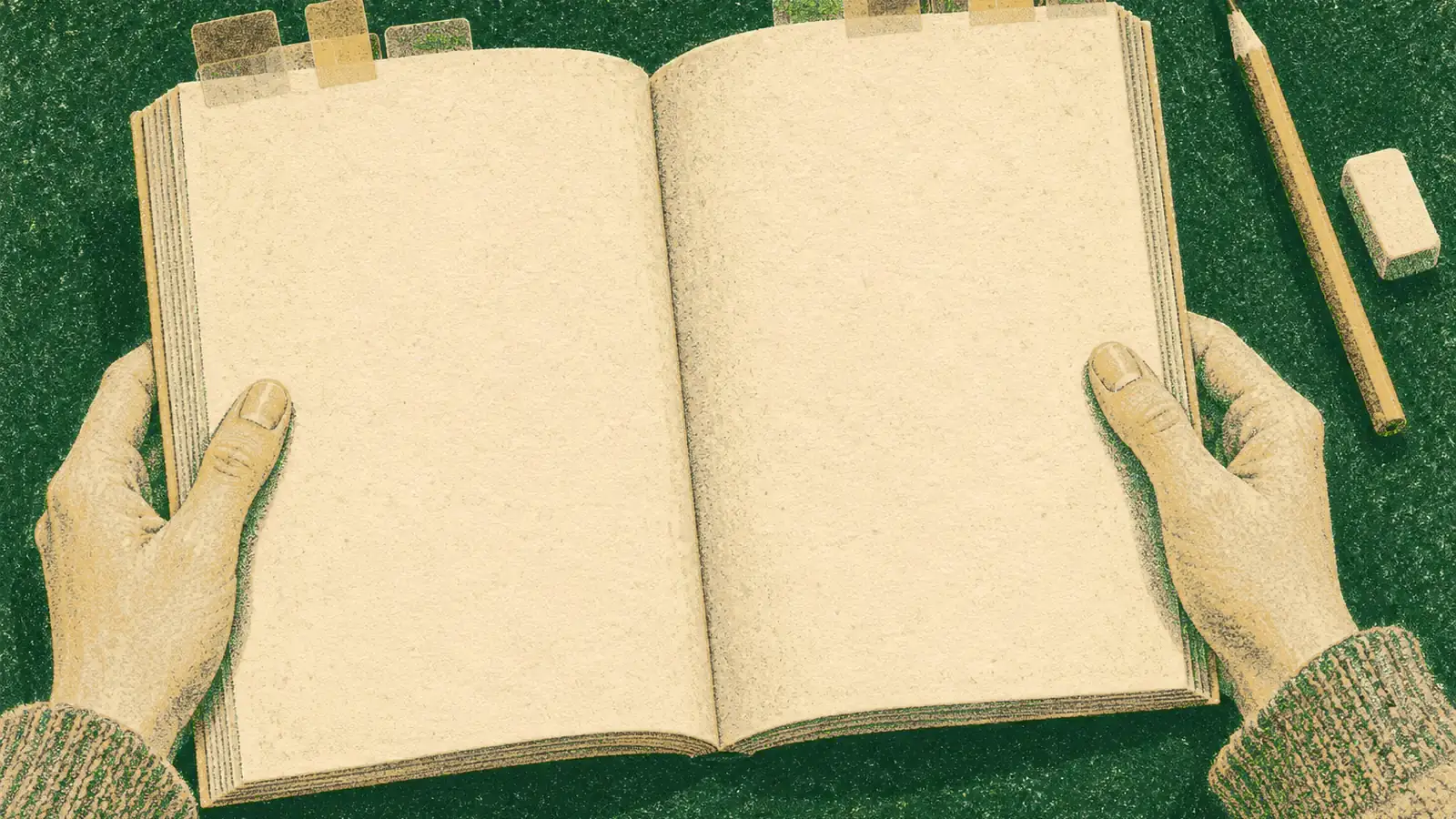
How you annotate a book depends first on who owns it. Choose materials that protect the paper and keep your marks simple enough that you can carry on reading. For personal copies you intend to keep, use a soft graphite pencil and a few margin symbols to record your thoughts. Leave library books and borrowed copies unmarked; use a loose paper bookmark or a separate reading notebook instead. On an e-reader or tablet, built-in highlights and notes give you room to respond without touching a physical page.
If you have seen a textbook spoiled by bleeding yellow highlighter, smeared ballpoint ink, or brittle folded corners, you may hesitate to mark a book. An elaborate set of pastel notes and color-coded pens can be just as discouraging: stopping at every paragraph makes a good novel feel like paperwork. Keep the tools and the routine manageable. Annotation can help you follow a dense argument, understand what you read, and save thoughts you will want when writing an essay or review, or leading a discussion.
The Physical Threshold: Owned Copies Versus Borrowed Volumes
Before picking up a pencil, check what kind of copy you have. A second-hand paperback you own calls for different care from a public library loan, an heirloom hardback, or a rare edition.
Readers have written in book margins since the invention of the codex. If you own an everyday reading copy, you can join that tradition while still taking care of the book. Protect it from physical damage, ink bleed, and early deterioration as you make your notes.
Leave library books, borrowed copies, and valuable volumes free of marks. Even faint pencil can leave dents in soft paper after you erase it. Library books also belong to the community, and the next reader should be able to read without someone else's opinions, corrections, or spoilers in the margins. Loose paper bookmarks and a companion notebook let you keep notes without attaching anything to the pages.
Safe Tools for Personal Paperbacks and Hardcovers
Ink and liquid highlighter can bleed or transfer on thin book paper. If you want marks you can remove later, start with a pencil in an everyday copy you own.
Why Choose a Graphite Pencil
For notes inside a book you own, choose a graphite pencil. The Library of Congress Collections Care guidelines recommend pencil rather than ink for necessary marks on works on paper. They also advise placing the sheet on a firm surface so the pencil does not emboss it. A book page needs the same light hand: support it and test a small mark before filling the margins.

Try HB or B lead first. If a harder pencil makes you press firmly, switch to a softer one. Any pencil can indent a page under pressure, and erasing later may disturb the paper surface.
A mechanical pencil with 0.5 mm or 0.7 mm 2B lead is handy when you read in bed or on a train. It keeps a consistent line width without sharpening, so you will not drop graphite shavings into the binding.
The Problem with Highlighters and Liquid Ink
Liquid highlighters can soak through thin pages and obscure text on the reverse. Test one on an inconspicuous page of a copy you own if you are unsure. For a borrowed copy, keep the highlighter in your notebook.
Wet ink can transfer to the facing page if you close the book before it dries. If you like writing with a pen, use it in a separate reading journal and keep the book's margins clear.
Erasers and Gutter Care
Take care with the eraser as well as the pencil. Rubbing repeatedly can scuff a printed page, whatever eraser you use.
The Northeast Document Conservation Center cautions that block erasers can abrade paper, particularly if you work an area too much. If a light mark must come out of your own everyday copy, test a small area, support the page, and stop if the surface begins to lift or smudge. Leave fragile or valuable books to a conservator.
Brush away any eraser crumbs before they reach the gutter. NEDCC specifically warns against using loose eraser granules in books because they can become trapped there.
Designing a Simple Symbol Key
Trying to fit full sentences into a narrow margin soon becomes frustrating. Longer notes interrupt the story, slow you down, and leave cramped handwriting that you may struggle to read later.
With a simple symbol key, you can mark a passage in two seconds and keep reading. Use your own shorthand if you prefer. Keeping it under six universal symbols makes it easier to remember.
These symbols work across fiction, history, and literary essays:
- Vertical line in the margin: Marks an important sentence, memorable description, or core argument without underlining individual words.
- Asterisk (*): Indicates a major insight, thesis statement, or critical turning point in the plot.
- Question mark (?): Flags confusing claims, unfamiliar concepts, unexplained character actions, or assertions you disagree with.
- Circle or box: Highlights key dates, unfamiliar vocabulary words to look up later, or recurring motifs.
- Delta symbol (small triangle): Marks a structural shift, character transformation, or change in tone.
- Exclamation mark (!): Highlights a striking metaphor, unexpected twist, or brilliant sentence worth quoting.
A vertical line and a symbol in the outer margin can mark a three-line passage at once. Add two or three keywords if you have a particular thought, such as "imagery of decay" or "contradicts earlier statement." That gives you enough to find the passage and remember your reaction when you return to it.
The Truth About Sticky Notes and Adhesive Tabs
Sticky notes seem like a harmless alternative to writing on the page, but paper preservation specialists caution against standard office notes.
The U.S. National Archives and Records Administration warns that adhesive tapes can stain and weaken paper over time. It also notes that sticky notes can become hard to remove and lift information. That makes a loose bookmark the safer choice for a library loan or a book you want to preserve.
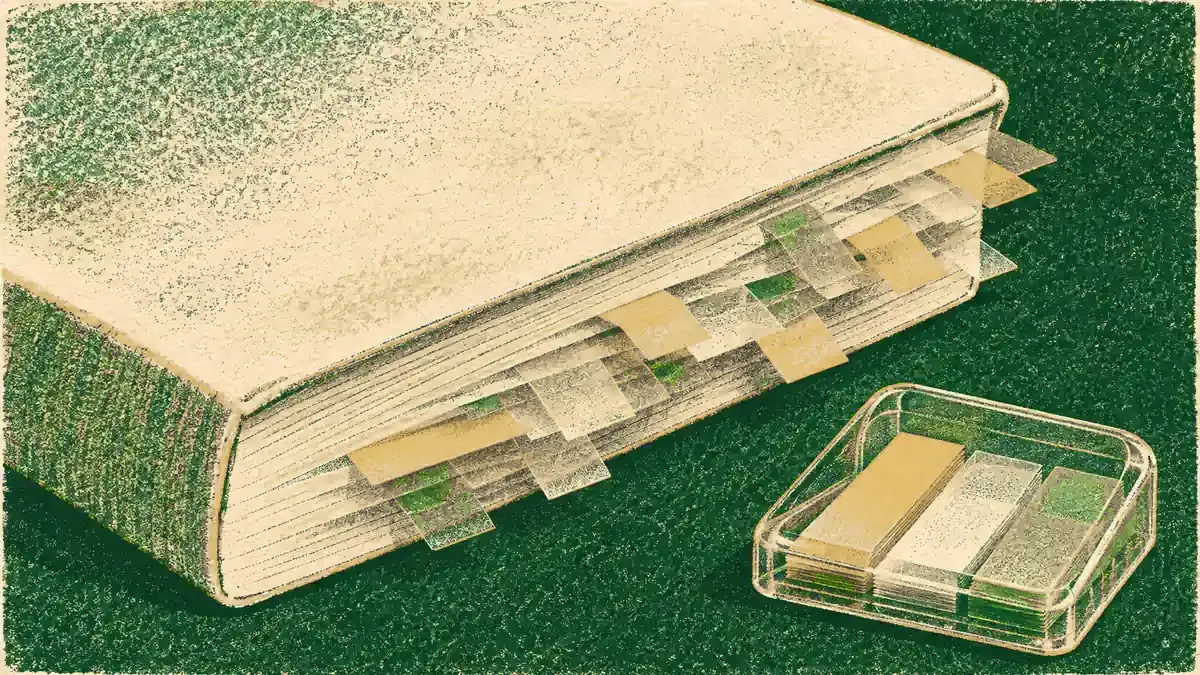
If you use tabs in an everyday copy you own, keep the risk low:
- Try a removable tab on an inconspicuous page first. Even a product sold as removable can leave residue or pull at a fragile surface.
- Never attach adhesive over printed words. Always place the adhesive strip in the white space of the outer margin, letting the colored tip extend past the paper edge.
- Remove temporary tabs promptly. When you finish your review or essay, peel them back slowly and stop if the paper lifts. Use loose slips instead of adhesive tabs in library books.
- Keep a separate index. Put the page or chapter location beside each symbol in a notebook so you can still find the passage after removing the tabs.
Non-Destructive Annotation for Library Books
The library makes reading more books affordable. Take care of each loan so the next borrower receives it in the same condition.
These three methods keep your notes off the library's pages.
Method 1: The Acid-Free Paper Slip Method
For a borrowed book, use a narrow loose slip of paper or a blank index card. Choose acid-free stock if you plan to leave the slip in a personal copy for storage.
Tuck the slip into the book as your bookmark. When you encounter a passage worth remembering, write the page number on the slip, followed by a short note or keyword:
- Chapter opening: Description of the landscape; note the page in your edition
- Next chapter: A character's explanation changes an earlier impression
- Closing scene: Question for the book club about the ending
The slip travels with the book, so your notes stay close to the passage without putting ink or glue on the page. Before returning the loan, remove the slip and file it with your notes.
Method 2: The Companion Reading Notebook
A pocket notebook gives you room to think through dense non-fiction, philosophy, or a multi-generational novel with a large cast. Write chapter summaries, sketch family trees, or copy long quotations without trying to fit them into a margin.
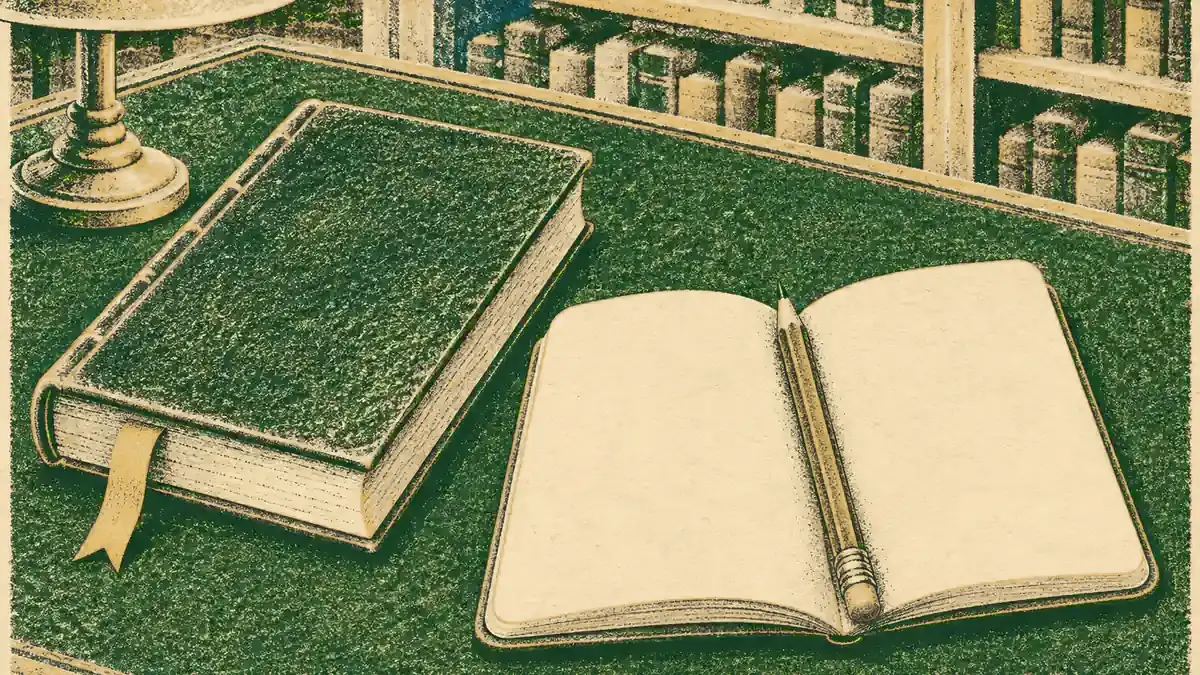
For a library book, try a two-column notebook spread for quotes, reflections, and vocabulary:
- In the left column, record the exact page number and paragraph location.
- In the right column, write your immediate reaction, critique, or question.
You keep the detailed thinking in your notebook and the book's pages clean. Your annotations stay on your shelf after the loan goes back to the library.
Method 3: Mobile Photo Scanning for Quotations
If you need a long passage from a borrowed book for a research paper or essay, take a clear smartphone photograph of the page. You can also copy the text with your device's built-in document scanner.
If your device offers text recognition, you can copy text from the photo into a notebook. Check it against the printed page for errors, record the page number and edition, and follow any photography rules at the library.
Annotating Digital Books and E-Readers
On an e-reader, tablet, or computer, you can highlight and comment without changing the original typography. Digital files cannot be torn, stained, or creased.
The W3C Web Annotation Data Model describes ways to connect notes to passages in a digital document. Your reading app may have its own method, but the practical move is the same: highlight a passage and attach a short note you can revisit.
Master E-Reader Highlight Color Systems
If your reading app offers several highlight colors, give each shade the same role in every book you read:
- Yellow: General key ideas, central arguments, and important narrative plot developments.
- Blue: Memorable sentences, exceptional stylistic choices, and passages worth quoting verbatim.
- Pink or Red: Confusing assertions, weak arguments, or facts you intend to verify.
- Green: References to other books, authors, historical events, or unfamiliar vocabulary words.
Stick to these four colors so you can tell at a glance what each highlight means.
Exporting Digital Clippings
Searchability is a useful advantage of digital annotations. Export and sharing options vary by app, book, and publisher, so check what your own reader allows before you depend on a clipping workflow.
When export is available, save the notes to your computer and tag them by theme. Otherwise, copy a few key notes into your notebook with enough location detail to find the passages again.
Worked Example: Annotating a Passage Three Ways
Consider the opening of Jane Austen's 1813 novel Pride and Prejudice. You can annotate the same sentence in three ways, depending on your copy.
Austen begins:
It is a truth universally acknowledged, that a single man in possession of a good fortune, must be in want of a wife.
1. In an Owned Paperback
- Tool: 2B graphite mechanical pencil.
- Mark on the page: A single vertical pencil line in the left margin next to the sentence.
- Margin keyword: In the outer margin, write: "Irony / societal expectation."
- Outcome: The sentence is indexed immediately. When re-reading or skimming the chapter, your eye catches the vertical line and note without wading through distracting highlighter fluid.
2. In a Library Hardcover
- Tool: Loose paper slip at the opening chapter.
- Slip notation: "Opening line: irony about money and marriage." Record the page number from this copy.
- Outcome: No marks or adhesive touch the library paper. You hold a portable note ready for class discussion.
3. On an E-Reader
- Tool: Blue highlight with an attached digital note.
- Typed digital note: "Classic Austen irony establishing money and marriage as central conflicts."
- Outcome: The note stays with your digital copy for later review; check your app's sharing options if you need it in an essay draft.
How Annotations Later Help with Reviews, Essays, and Book Clubs
Once you finish a book, the notes you made while reading give you material for reviews, essays, and discussions.
Powering Trustworthy Book Reviews
A convincing review backs up opinions with passages from the book. After a four-hundred-page novel, memory alone can leave you reaching for vague remarks about pacing and characterization.
Specific examples make criticism persuasive. Look through your margin asterisks and exclamation marks. Choose two or three passages that show the author's prose style or an inconsistency in a theme, then use them to explain your judgment.
Assembling Academic Book Reports and Essays
Annotations save time when you write a literature essay. Without them, you can spend hours searching hundreds of pages for a quotation you half remember from chapter four.
Use your symbol key to sort the evidence. Gather passages marked with a delta to trace a character's growth, or look through your question marks for unresolved tensions that might support a thesis. Then try building a clear writing outline from those notes before you draft the argument.
For a book report, keep the edition and page details with each passage you plan to cite.
Leading Dynamic Book Club Discussions
"So, what did everyone think?" can leave a book club with little to say. Specific, provocative questions give people something to respond to and room to disagree.
Before the meeting, spend ten minutes looking through your tabs or margin notes. Choose three moments that drew a strong reaction:
- A passage you marked with a question mark because a character's decision felt unearned or contradictory.
- A scene you marked with an asterisk where the central theme became explicit.
- A line of dialogue you marked with an exclamation point that surprised you.
Page numbers and exact quotations give everyone a passage to discuss and help keep the conversation going. Ask members to bring one question and one marked passage to the meeting.
Common Annotation Mistakes to Avoid
These five habits can interrupt your reading or damage your copy.
1. The Highlighting Trap
Highlighting takes little effort, which can make it feel more useful than it is. You recognize a sentence without having to explain what it means. Six months later, a page of neon yellow may tell you very little about why you marked it. A vertical pencil line and a two-word margin note ask you to put that thought into words.
2. Over-Complicating the System
A ten-color key with eight pens, four types of flags, and a laminated legend is a lot to manage while reading. Choosing the right tool can keep pulling you out of the story. If you are spending more time deciding between lavender and turquoise than thinking about the prose, simplify.
3. Leaving Temporary Sticky Flags in Books for Years
After writing your review, finishing your essay, or holding your book club meeting, take two minutes to remove the temporary flags.
4. Dog-Earing Paper Corners
Folding a corner leaves a permanent crease and weakens the paper fibers. Over time, the corner can become brittle and snap off. Use a flat bookmark or a thin acid-free paper slip instead.
5. Writing While Rushing
Writing with a heavy hand while balancing a book on your knee in a moving vehicle can leave jagged, unreadable marks. The pencil may even punch through thin paper. If you cannot write neatly, use a loose bookmark and add your note later at a stable table.
Frequently Asked Questions About Annotating Books
Does annotating a book decrease its resale value?
Yes. Marks typically lower the resale value of collectible, first-edition, or antiquarian books. If you expect to sell a copy to a used bookstore or collector, use non-adhesive paper bookmarks or a separate notebook. In an everyday paperback you plan to keep for decades, pencil notes can add personal value by preserving your thoughts about the book.
What is the best pencil lead hardness for writing in books?
Use 2B lead. It makes a clear, dark mark with gentle contact, avoiding permanent dents in the paper. Harder leads such as HB or 2H need more pressure and can scratch or tear a thin page.
How do I remove pencil marks without tearing the page?
For an everyday copy you own, first test a gentle erasure in an inconspicuous place. Support the page, use as little pressure as possible, and stop if print smudges or fibers lift. Brush crumbs away from the gutter. Do not erase a library or valuable book yourself.
Can I annotate with highlighters if I use Bible highlighters?
Dry highlighters, often sold as Bible or gel highlighters, use a solid, waxy translucent crayon instead of liquid ink. They do not bleed through thin paper or wrinkle lightweight pages. They are much safer than wet markers for personal copies, but the wax is hard to remove and can collect dust over decades. Soft graphite is still the better choice for long-term preservation.
How should I annotate audiobooks?
If your audiobook app has a bookmark feature, mark the moment and check whether it allows a note. A pocket notebook also works: record the chapter and timestamp beside your thought so you can find the passage again.
What is the difference between marginalia and an annotated bibliography?
Marginalia means the handwritten notes, symbols, and comments a reader puts in the margins. An annotated bibliography is a formal academic document: each research-source citation has a paragraph that summarizes and evaluates the source and explains its relevance to the project.