What Book Should I Read Next? How to Choose
Choosing what book to read next gets easier when you stop considering every book you might ever want to read. Narrow the choice to something that suits you today. A paper reading wheel can pick a mood for you, a short novel can follow a long one, and the season can suggest a direction. You can also ask a librarian for help or decide whether you actually want the next book in a series.
Finishing a great book can leave you oddly stuck. There are recommendations from friends on the nightstand, hundreds of tagged titles in your library app, and another bestseller waiting every time you open an online bookstore. Looking through all of them is tiring. You start thinking about what you ought to read, what you paid for, and whether you will regret your choice before you have opened anything.
Why To-Read Piles Cause Decision Paralysis
Library apps, second-hand bookshops, digital lending, and digital book clubs make it easy to find books faster than you can read them. The problem is having to choose among so many.
Psychologists describe this as choice overload: evaluating too many competing options takes mental effort. Readers can end up anxious, second-guessing themselves, or turning to a screen because choosing a book feels like work.
Unread books carry their own pressure. A spine on the shelf reminds you of money spent or a friend's recommendation. That dense history may still interest you someday, but picking it up out of guilt can stop you reading altogether.
Keep your long to-read list as a place to save possibilities. For the next book, work from a much smaller selection: three to five titles at any given moment. You can leave the rest where they are without making a decision about them today.
How to Build and Spin a DIY Reading Wheel
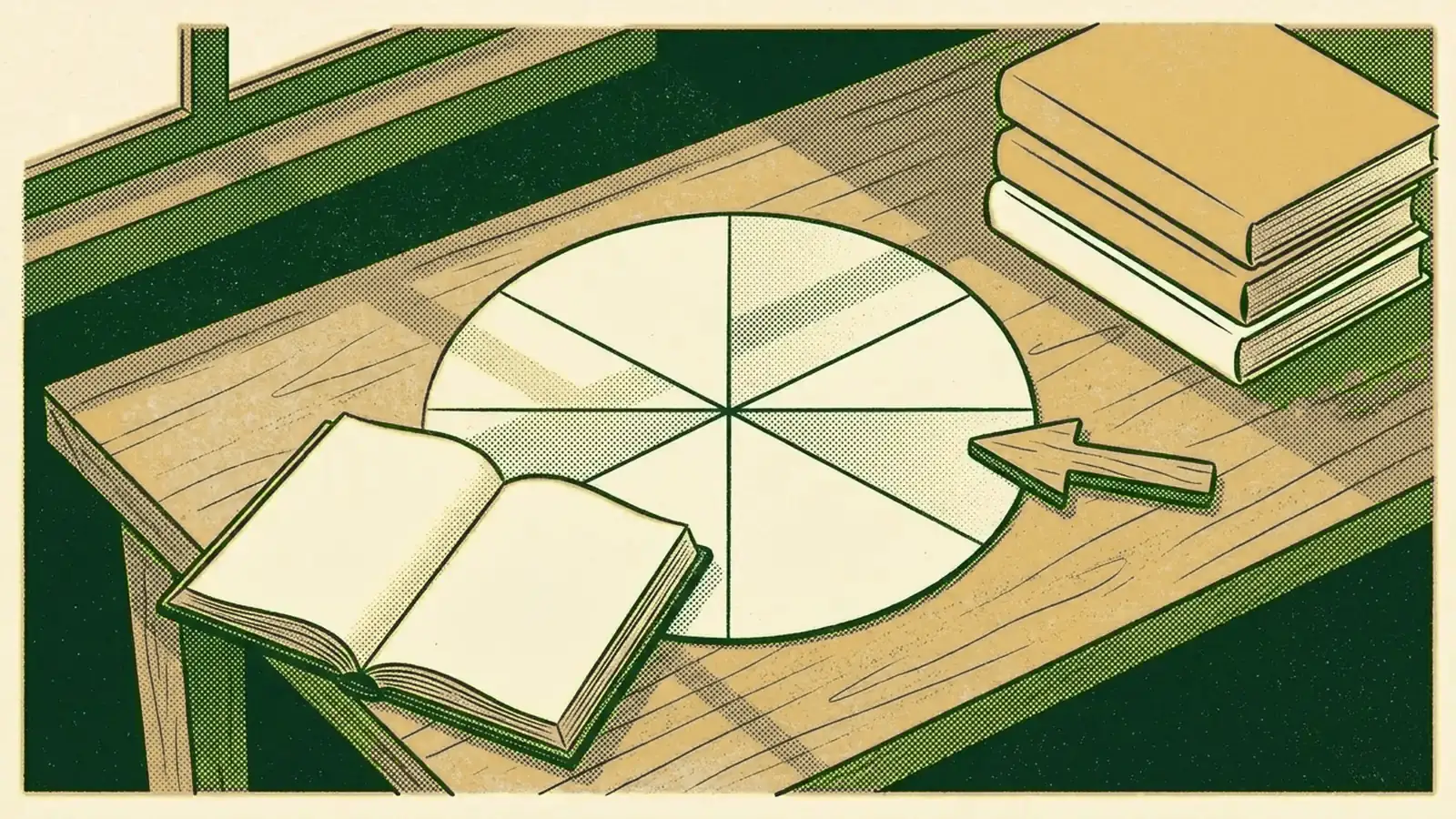
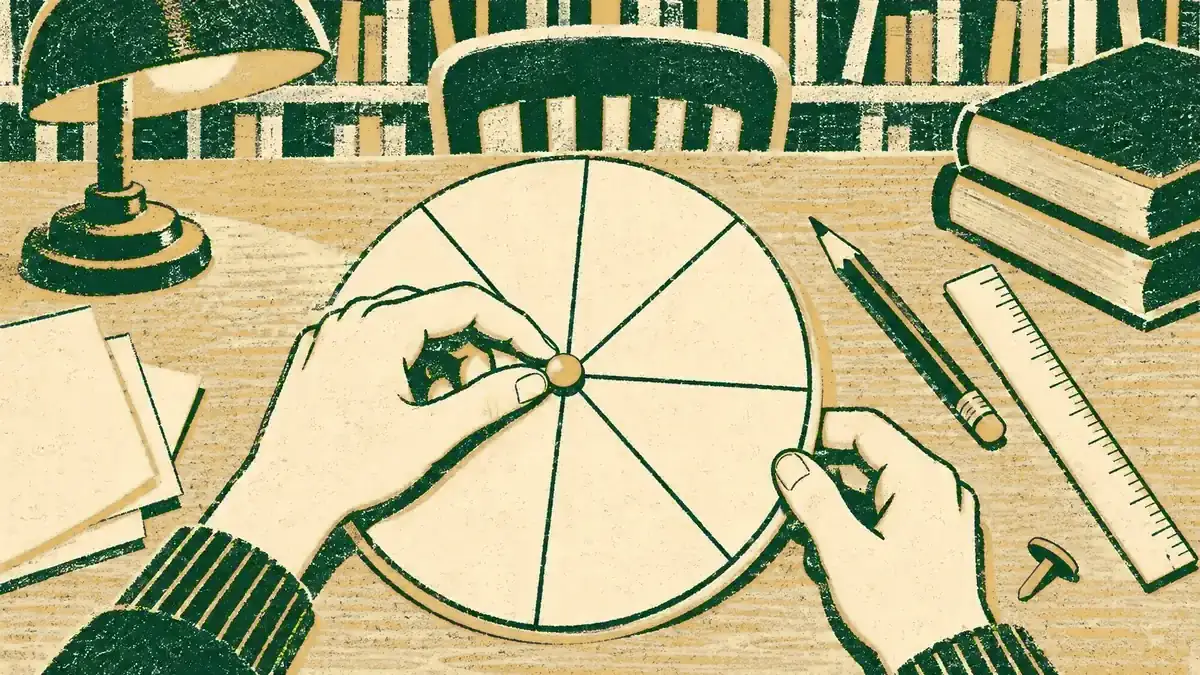
A reading wheel lets chance make part of the choice. Divide a circle into sections for different reading moods, put a few titles in each, and spin. You still choose the books that go on it, so the result stays within your interests.
There is an older, much more elaborate bookwheel behind the idea. In 1588, Italian military engineer Agostino Ramelli designed a revolving desk so scholars could consult several heavy volumes in one place. The paper version has the simpler job of helping you choose from your backlog.
Materials You Need to Make a Reading Wheel
You need a few stationery supplies:
- A piece of heavy paper, cardstock, or watercolor paper cut into a circle roughly eight to ten inches in diameter.
- A ruler and a pencil to divide the circle into equal pie segments.
- A pen or fine marker to label each segment.
- A brass paper fastener (split pin) and a cardboard arrow, or simply a pencil and a paperclip to act as a center spinner.
You can also skip the attached spinner. Spin a pencil on the center, roll an eight-sided die, or move a small marker one wedge clockwise whenever you finish a volume.
Dividing Your Wheel by Mood Rather Than Traditional Genre
Bookstore genres help you find a shelf, but they do not always tell you whether a book will suit your evening. A bleak historical drama asks something different of you than a funny travel memoir, even if both end up in the history section.
Try six or eight sections based on mood. These are possible labels, with the kinds of books you could put in each:
- Comfort and Familiarity: An uplifting novel, a gentle domestic drama, or a reread of a favorite classic.
- Propulsive Momentum: A fast mystery, a psychological thriller, or an adventure with short chapters.
- Deep Immersion: A long classic, a detailed historical novel, or a family saga.
- Curiosity and Inquiry: Narrative nonfiction about science, history, philosophy, or social customs.
- Concise Masterpiece: A novella or short novel you can finish in a weekend.
- Poetic Prose: A character-driven novel you want to read for its sentences and atmosphere.
- Wildcard Discovery: A blind pick from a library display, a friend's gift, or a recommendation you have not checked out yet.
- Short-Form Variety: Essays, short stories, or poetry you can read in brief sittings.
Loading and Operating the Wheel
Pencil one or two titles into each wedge. More than that and you are back to sorting through a crowded list.
When you finish a book, spin the wheel. If it lands on "Concise Masterpiece," choose between the two short novels in that section. After reading your choice, erase it and add another candidate from your main list.
The wheel makes the category decision, leaving you with a smaller choice. Pay attention if you dislike the result. Disappointment is useful here: it tells you that you do not want that kind of book right now. You are allowed to spin again.
Alternating Long and Short Books to Protect Momentum
Reading huge books back to back can wear you out. After a long Victorian classic or an epic fantasy, another long novel may feel like too much, however much you expected to enjoy it.
Follow it with a novella or a short standalone book. Changing the length and scope gives you a different reading experience without asking for another long commitment.
The Palate-Cleanser Strategy
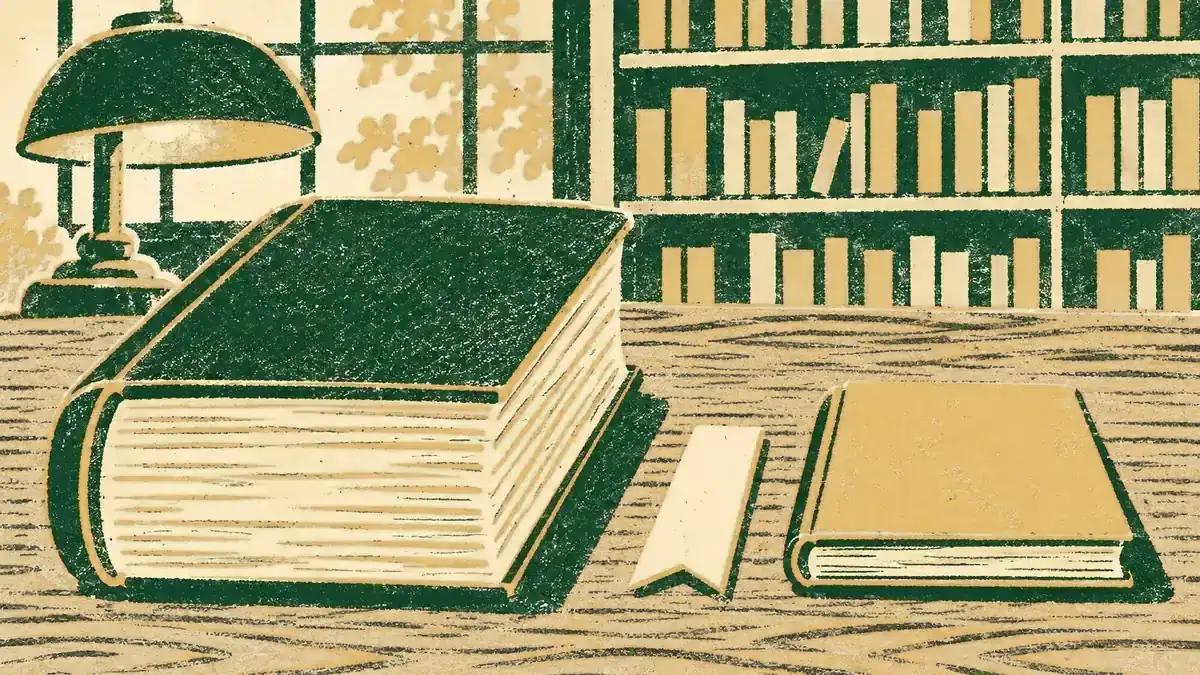
A novella can work like the sorbet between courses: a change before you take on something substantial again. You still get characters, tension, and a complete story. Finishing it in two or three days can make you eager to pick up another book.
After John Steinbeck's multi-generational East of Eden, for example, you could turn to his compact, character-focused novel Cannery Row. After an emotionally demanding psychological novel, Small Things Like These by Claire Keegan or Passing by Nella Larsen gives you plenty to think about in a much shorter work.
Keep a few compact books in mind for these intervals. You do not need every choice to be a test of how many pages you can finish.
Aligning Your Next Book with Seasonal Themes
Your energy and attention change through the year. Weather, daylight, and seasonal routines can all suggest what you might enjoy reading next. Use them as prompts when your list offers no obvious choice.
Shared reading programs also give readers a reason to pick up a book at a particular time. The National Endowment for the Arts Big Read organizes community reading around thematic titles. The Library of Congress offers reading and book discovery resources through Read.gov.
Spring: New Beginnings and Intellectual Curiosity
Longer days can put you in the mood to learn something. Try narrative nonfiction, nature writing, gardening history, or a coming-of-age novel. Science, philosophy, and books about personal renewal also suit that spring curiosity.
For a lighter choice, The Blue Castle by L. M. Montgomery offers a story of renewal and independence. Its springtime awakening makes it a fitting book for the season.
Summer: Immersive Journeys and Expansive Adventures
Travel, time outdoors, and longer daylight hours can make room for an adventure tale or a sweeping historical epic. Speculative fiction and travel writing are other summer possibilities.
Think about interruptions, too. If you will be reading on vacation, in a park, or at the beach, choose something you can put down and return to easily. A novel with several perspectives or an episodic travel account can suit those broken stretches of time.
Autumn: Atmospheric Mysteries and Reflective Prose
Cooler weather and turning leaves make darker stories appealing. Campus novels, gothic suspense, eerie folklore, and reflective mysteries are all good places to look.
Drive Your Plow Over the Bones of the Dead by Olga Tokarczuk takes place in a secluded Polish mountain village during harsh weather. Its melancholy, slightly uncanny atmosphere suits late autumn. Quiet evenings also leave room for landscape descriptions, candlelit scenes, and stories that pause over philosophical questions.
Winter: Monumental Classics and Cozy Solitude
Long winter evenings suit books that ask for sustained attention. A substantial nineteenth-century novel or a detailed biography gives you something to settle into indoors.
A psychological novel such as Kazuo Ishiguro's The Remains of the Day is another option. Its deliberate, reflective prose rewards the kind of quiet reading that cold weather can encourage.
Tapping Library and Bookseller Recommendations
Online recommendations can turn up a popular book you enjoy, but they can also leave you looking at five books much like the one you just finished.
Librarians and independent booksellers can ask what you liked about it. Readers' advisory looks beyond sales and genre to the qualities that matter to you as a reader.
Understanding Appeal Factors in Readers' Advisory
ALA readers' advisory guidance discusses appeal factors such as pacing and mood that can be more useful than a genre label alone.
These five dimensions can help you explain your taste:
- Pacing: Do you want quick turns in the plot, or time to linger over details?
- Tone: Are you looking for humor, comfort, bleak realism, or suspense?
- Characterization: Would you prefer an intimate first-person account or an ensemble cast spread across a large historical setting?
- Storyline: Do you want a puzzle with a clear resolution, or an open-ended character study concerned with what someone comes to understand?
- Language and Frame: Do you enjoy ornate, lyrical prose, or plain sentences that stay out of the story's way?
Libraries often have staff who prepare recommendations from this kind of information. The New York Public Library personalized recommendations, for example, let patrons submit recent favorites and receive reading lists chosen for their preferences.
How to Ask a Bookseller for Recommendations
"What is good right now?" often sends a bookseller toward the bestseller display. Give them more to work with by describing a reading experience:
"The last book I truly loved was Piranesi by Susanna Clarke, because I enjoyed the mysterious, dreamlike setting and the protagonist's gentle, observant voice. Could you recommend a novel that offers a similar sense of wonder and quiet architectural atmosphere?"
That description identifies a setting and a voice, rather than just a genre. It gives the bookseller a reason to look beyond the front table and suggest something from the backlist that a retail recommendation might miss.
Knowing When to Follow a Series and When to Step Away
A series can settle your next-book question for months. If you love the characters or the world, having three, five, or ten volumes waiting is a pleasure. But continuing automatically can wear out that pleasure. By volume three or four, familiar plots and stalled character development may start to feel like homework.
The Golden Rule of Series Intermissions
Try reading one or two unrelated standalone books between installments. An unbearable cliffhanger may send you straight to the next volume, of course. Otherwise, a break gives you time to absorb what you have read and spend time in a different genre or period. Returning to the characters can feel welcome again.
Martha Wells's science-fiction novellas The Murderbot Diaries make this easy. Start with All Systems Red, then continue with Artificial Condition when you are ready. You can read an installment in an afternoon, move to a historical biography, and return to the series weeks later.
With Ursula K. Le Guin's Earthsea sequence, going straight from A Wizard of Earthsea to The Tombs of Atuan can be rewarding. Reading an unrelated contemporary novel between them can also help you appreciate Le Guin's mythic style when you return.
Before buying or requesting the next installment, check WorldCat for original publication chronology, translations, and companion volumes. Those records help you work out the intended reading order.
Worked Example: Streamlining a To-Read Selection List
A reading list can collect obligations alongside books you want to read. Work deadlines, purchases, and tracking goals all compete for attention until choosing anything feels difficult.
Before: > Reading Priority Notes for November: Must finally finish the long nineteenth-century history tome because it cost thirty dollars and has been sitting on the shelf for eight months. Need to read three corporate communication guides by next Tuesday for office career development. Should probably pick up the viral celebrity autobiography everyone is debating online, even though the premise sounds unappealing. Also picked up six assorted paperbacks from the library sale, including an English village mystery, a narrative history of bread baking, and two translated novellas. Need to calculate daily page quotas, aim for seventy pages every evening, and log all reading times into an annual performance spreadsheet before selecting anything else.
The book choices are buried under the cost of the history book, office deadlines, and pressure to keep up with social media. Page quotas and spreadsheet logging add more work before any reading begins. Removing those demands leaves the English village mystery, the history of bread baking, and the translated novella.
After: > Reading Priority Notes for November: Choose one engaging title that matches current evening energy, such as an English village mystery, a narrative history of bread baking, or a concise translated novella. Read without daily quotas or tracking spreadsheets.
This note takes less than thirty seconds to review. It asks you to choose according to your evening energy, without making you calculate or record anything first.
A Step-by-Step Selection Routine for Every Finished Book
A simple routine helps you move from one finished book to the next without spending a week deciding.
- Take a twenty-four-hour pause: After a memorable book, give yourself time to absorb the ending instead of opening another dense narrative within sixty seconds. Spend the day thinking about the characters and themes, and jot down impressions in a notebook if you want to.
- Check your energy and mood: An exhausting work week and a restful weekend call for different books. If you are tired, a dense philosophical treatise may have to wait. Choose comfort, momentum, or brevity from your wheel.
- Select three different finalists: Pull exactly three physical books from your shelf or wheel. A short novella, a fast mystery, and a narrative history give you different possibilities. Lay them side by side on your desk or reading table.
- Try five pages: Read the first five pages of the first candidate, noticing the voice, rhythm, and atmosphere. If your attention wanders, try five pages of the second. Usually one of the three will catch your interest.
- Give your choice fifty pages: Put the other two back and read fifty pages without reopening the decision. That gives the author room to establish the setting and central problem.
Once you have chosen, make time for modest, regular reading sessions. The same approach helps with a daily writing habit: small commitments are easier to sustain than occasional marathons.
Common Mistakes When Choosing Your Next Book
These five habits can make choosing and finishing books harder than it needs to be.
1. Choosing Out of Guilt or Obligation
Buying a book years ago or seeing an influencer praise it does not mean you have to read it now. Nor does the feeling that an educated person ought to have read it. If the title feels like an assignment, put it back and choose something you are curious about.
2. Maintaining an Unpruned, Multi-Hundred-Book Backlog
A list of five hundred books needs occasional attention. Review it twice a year and remove titles that no longer interest you. Your taste changes; deleting a title simply acknowledges that you would rather spend your reading time elsewhere.
3. Refusing to Quit Books That Stall Your Rhythm
If you have read fifty or seventy-five pages and dread picking the book up, close it. Forcing yourself onward can put you off reading for weeks. Difficulty can be worthwhile, but stubbornness alone is a poor reason to continue.
4. Bingeing One Narrow Subgenre Until Burnout
After six domestic psychological thrillers or four World War II historical novels in succession, you may notice familiar devices more than the author's craft. When every twist seems predictable and every trope irritating, change genres, periods, or formats.
5. Over-Planning Your Reading Calendar Months in Advance
A twelve-month schedule that specifies your novel for the second week of October leaves little room for changing moods or an unexpected recommendation. Plan your next two or three titles at most. Leave yourself room to want something else.
Frequently Asked Questions
What should I do if I am stuck in a severe reading slump?
Choose something short that draws you in quickly. A novella under one hundred and fifty pages, a graphic novel, humorous essays, or an absorbing audiobook can help when you cannot concentrate on a long novel. Finishing an enjoyable story is enough for now; you can return to close analysis when you feel like it.
Is it better to choose my next book before or after finishing my current one?
Picking a title during your current book's final chapters gives you something to look forward to and avoids a long gap afterward. Gather or buy only one or two prospective titles. You can still change your mind when you reach the last page, and having the next book ready does not mean you have to start it immediately.
How do I balance reading backlist classics with new releases?
Try a one-for-one rotation. After each new release or contemporary bestseller, choose a book published at least twenty years ago. You can keep up with current conversations about books while spending time beyond the titles publishers are promoting now.
Can a reading wheel work for nonfiction readers?
Yes. Use subject areas in place of fiction moods: biography and memoir, natural history, science and technology, historical narrative, philosophy and psychology, craft and skills, social inquiries, and wildcard investigations. Moving between subjects gives you a break from reading several books about the same thing in succession.