How to Read More Books Without Forcing It
Reading more starts with making it easier to pick up a book. Keep one within reach, give it a regular place in your day, and let yourself stop reading books you dread opening. People who finish dozens of books each year don't need superhuman discipline or speed-reading tricks that sacrifice comprehension. They make room for reading whenever a few spare minutes appear.
A Pew Research Center survey found that 75 percent of adults in the United States report reading a book in some format over the course of a year. Of those surveyed, 65 percent read print books and 30 percent read e-books. The survey also found that 33 percent of Americans read in digital formats while also reading print books. Most adults who want to read more already have the interest. Finding time for a book is harder when a phone offers an effortless distraction.
You don't have to wait for an uninterrupted afternoon. Reading can fit around the rest of your day, and your choice of book can change with your mood. A routine you can keep, with room to put an unappealing book aside, gives you a better chance of finishing more books over the year.
Make time for twenty minutes a day
It's easy to put off reading when you think a session needs a large block of free time. You save a two-hour window on Saturday, then an errand or household demand takes its place. After a few weeks of this, you haven't opened a chapter and feel out of touch with your books.
Try a twenty-minute daily session. That is short enough to fit into most schedules without much rearranging. Even after a tiring workday or a busy day with family, twenty minutes before you turn out the bedside lamp can feel manageable.
You may read a few pages or a whole chapter in twenty minutes. The amount will vary with the book and your attention that day. What matters is that you opened it, and that the next session feels easy to start.
Attach the session to something you already do. Read with your morning coffee, after dinner, or just before sleep. The same principle applies to building a daily writing habit: a small, regular slot is easier to return to than a large assignment you keep putting off.
Carry a book for the gaps in your day
Some reading happens while you're waiting for something else. You might be at the doctor's office, in line at the post office, or on the subway. Perhaps you've arrived ten minutes early to pick up a child from school. Sociologists often call these fragments fringe time or dead time.
For most adults, the immediate response to a wait is to reach for a phone and scroll through social feeds or headlines. Convenience has a lot to do with it. Your phone is close at hand, and you don't have to decide what to do with it.
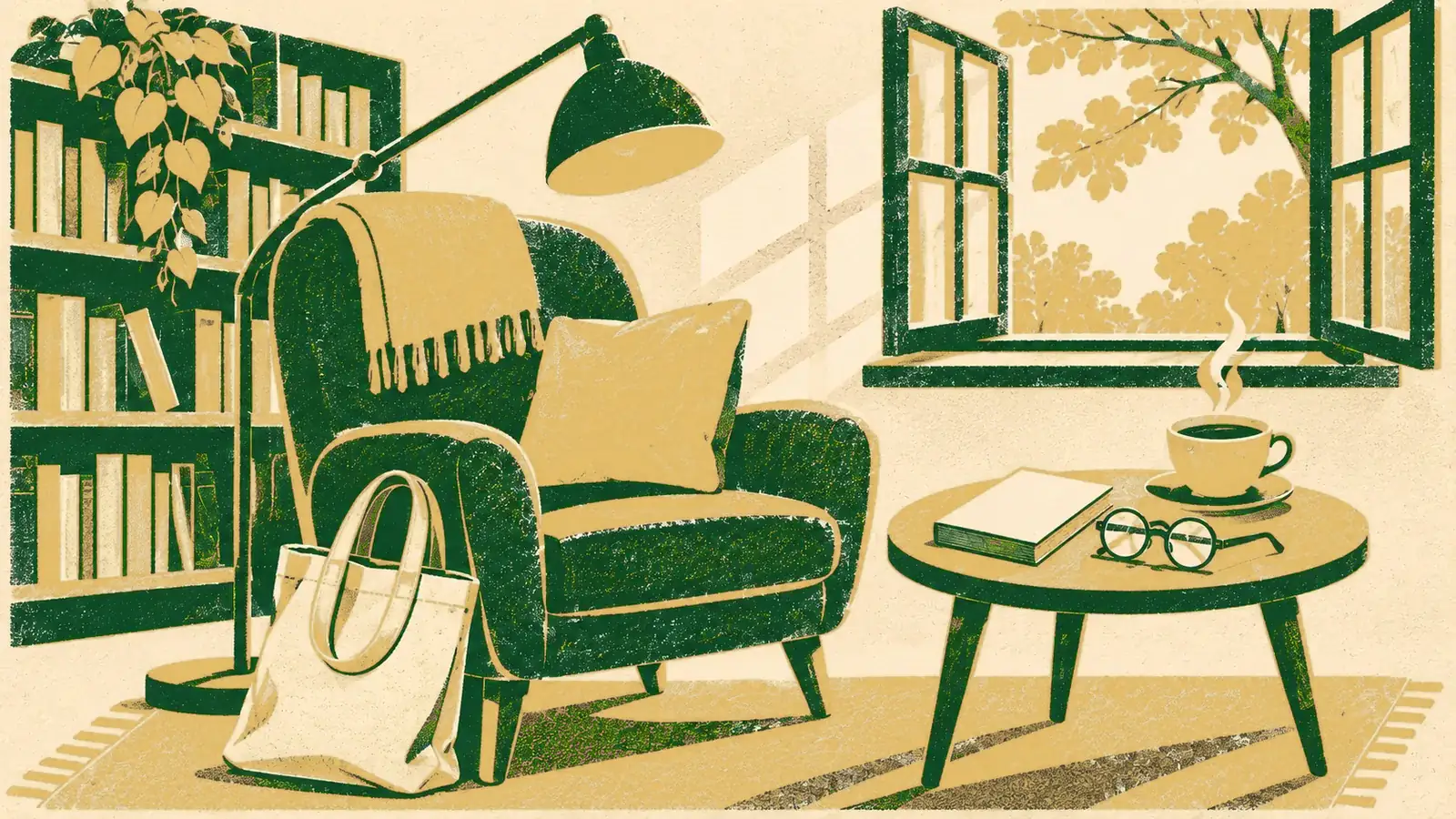
Give yourself another easy choice by carrying a book or dedicated e-reader. A lightweight paperback can stay in your work bag, canvas tote, or jacket pocket. When you're on a train platform or in a waiting room, you can reach for it as readily as you would your phone.
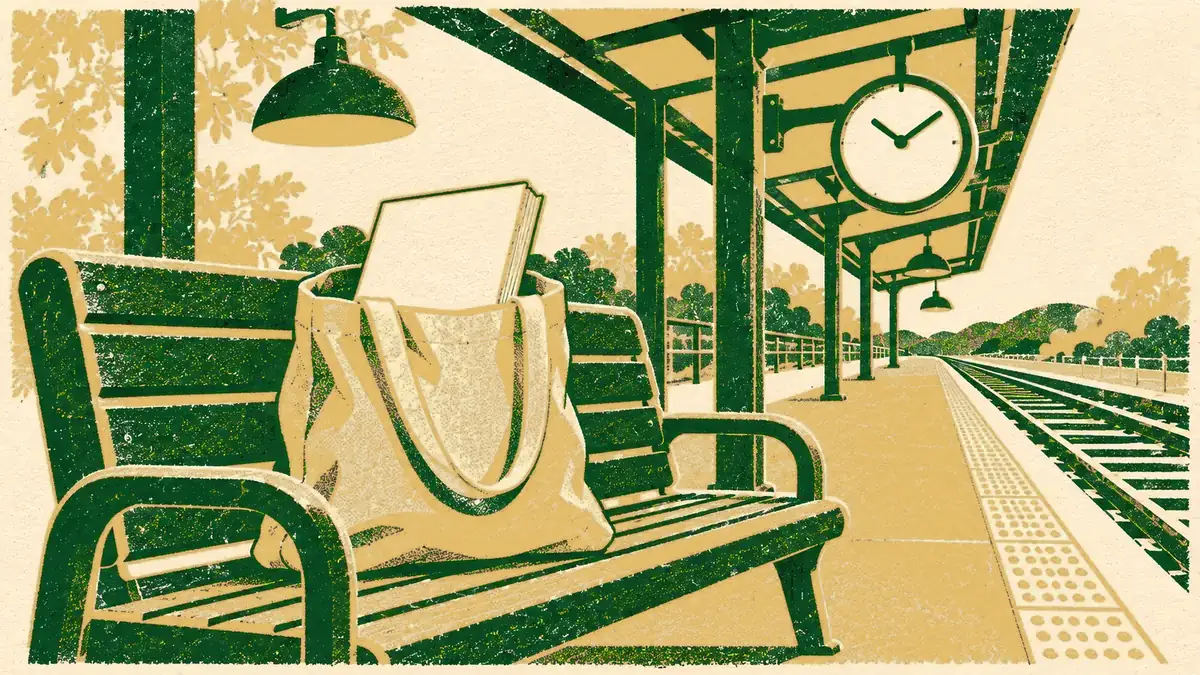
At home, leave your current book where you'll see it. A closed book on a shelf in another room is easy to forget when the television or tablet is right in front of you. The kitchen counter, your favorite chair, and the space beside your pillow are all useful places to keep it. You shouldn't have to go looking for your book each time you feel like reading.
Read across formats
Some readers feel that only a printed book counts as reading. A well-printed paperback or clothbound hardcover has its own pleasures, but sticking exclusively to paper limits when you can enjoy a book during a busy week.
Audiobooks and e-readers give you more options. The Pew survey found that 33 percent of U.S. adults read in digital formats as well as print. Each format suits different situations and levels of energy; you can choose whichever fits the time you have.
Listen while your hands are busy
An audiobook lets you follow a story while commuting in traffic, jogging, washing dishes, or folding laundry. You can't safely hold a book during those activities, but you can listen to a narrator while getting through the task.
The choice of book and playback speed matters:
- Match the book to the activity. Author-narrated memoirs, narrative histories, and fiction with a strong plot work well on audio because they suit spoken storytelling.
- Keep dense or heavily footnoted books for print. Philosophical works, books with extensive diagrams, and experimental novels with non-linear structures often need a kind of backtracking that's awkward in an audio player.
- Give the narrator time. Increasing the speed may help you finish sooner, but you can lose the emotional effect and miss details of the performance. A natural pace between 1.0x and 1.25x preserves vocal nuances and dramatic pauses.
Keep an e-reader handy
Dedicated e-readers with electronic ink displays work well alongside a print collection. You can read on one without the notifications that interrupt reading on a phone or tablet.
You can increase the font size when your eyes are tired or look up a word with a tap. A device with its own light also lets you read in bed without turning on a bedside lamp.
Many public libraries lend ebooks. Check your own library's catalog and borrowing app for available titles. You can also use WorldCat to locate editions held by libraries, and browse The New York Public Library recommendations when you need ideas across genres.
Give a book fifty pages
Refusing to quit an unenjoyable book can hold up all your reading. The sunk cost fallacy is familiar: you've spent twenty dollars on a hardcover or three hours on its opening chapters, so you feel you owe it the remaining pages.
Then the book sits on your nightstand. You don't want to pick it up, but you won't start something else until you've finished it. Days pass, sometimes weeks, and the obligation to finish has become a reason to avoid reading altogether.
The Fifty-Page Rule gives you a point at which to decide. Give the author fifty pages to introduce the premise and characters and let you hear their voice. At page fifty, ask whether you want to continue. If you're bored, annoyed, or indifferent, close the book and set it aside permanently without guilt.
There are thousands of exceptional books, and nobody has time to read more than a tiny fraction of them. Two weeks spent dragging yourself through a novel you dislike is time you could spend on a book that changes how you see things. You get to choose where that time goes.
Difficulty alone isn't a reason to quit. A demanding classic or detailed historical analysis can take effort and still fascinate you. Boredom is different: perhaps the prose feels flat, the characters' motives don't convince you, or the subject doesn't interest you. Pay attention to whether the effort brings you any pleasure or insight.
Giving yourself permission to stop helps you stay curious about what you might read next.
Keep more than one book going
Reading a single book from start to finish asks you to want the same thing every time you sit down. A biography of an eighteenth-century political figure might hold your attention on a quiet morning. After a stressful ten-hour workday, you may have little patience left for political treaties. If it's your only active book, the television can seem more appealing.
Keeping two or three books going gives you a choice that fits your energy. You can return to the biography when you have the concentration for it and read something else this evening.
Try a three-book rotation
Choose three books that serve different purposes:
- A book that asks for concentration. This could be a substantial history, a literary classic, or a study of craft such as A Swim in a Pond in the Rain by George Saunders. Save it for weekend mornings or daytime hours when you're alert.
- A story you want to return to. Try a mystery, a short novella like Small Things Like These by Claire Keegan, or a novel like Drive Your Plow Over the Bones of the Dead by Olga Tokarczuk. Keep it for evenings when you want to follow a story without the effort of academic reading.
- An accessible audiobook or nonfiction title. A memoir, essay collection, or narrative history on your audio app can accompany walks and household chores.
Choose contrasting styles, subjects, and voices. Two sprawling nineteenth-century Russian novels may leave you mixing up characters and plotlines. A historical study alongside a contemporary novel and a collection of essays is easier to keep straight.
Keep a record you enjoy
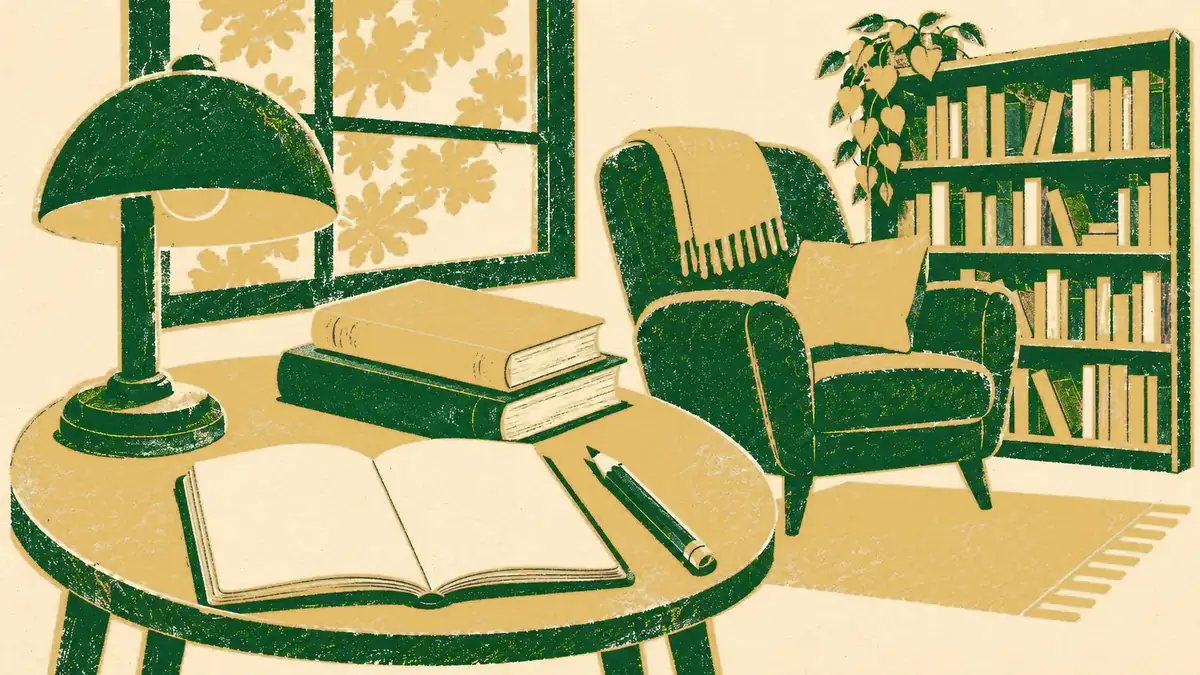
A reading log can help you look back at what you've read, but tracking apps can also introduce pressure. Annual challenges, progress bars, and comparisons with other readers give you more things to measure.
That pressure can change your choices. You pick a shorter book to reach a yearly goal, rush a difficult passage to keep the daily count moving, or worry that your friends are getting ahead. Keeping up with the log starts to matter more than enjoying the book.
Use your record to save what you want to remember. Page counts and star ratings needn't take up much space. Your questions, reactions, and favorite sentences will tell you more when you look back.
The Folger Shakespeare Library's account of commonplace books describes how readers in the sixteenth and seventeenth centuries collected excerpts from books under subject headings. You can keep your own version privately, without special software or a completion target.
Notes on craft, character choices, and pacing also help you explain your opinions when you recommend a book to someone else.
Worked example: a simpler reading log
It's easy to start a log with good intentions and then ask too much of each entry. When one book takes ten minutes of data entry, the record starts eating into the time you wanted to spend reading.
This entry asks the reader to keep track of quite a lot:
Before: > Title: Small Things Like These. Author: Claire Keegan. Started: November 3 at 8:15 PM. Finished: November 5 at 9:40 PM. Format: Paperback. Rating: 4.5 out of 5 stars. Pacing: Deliberate. Mood: Somber. Personal reflection: Made me think about complicity. Must log this in the annual spreadsheet and calculate monthly completion averages before starting the next book.
After: > Small Things Like These by Claire Keegan. Made me think about complicity.
The shorter entry keeps the reader's main response to the book, which is what makes the journal worth returning to years later. The dates, rating, format, and pacing labels are gone because they did not help capture that response.
Put the habit into practice
Use these five steps to get started:
- Check your screen time for three days. Your phone's built-in report shows the hours you spend on social platforms, browsers, and video feeds. Find a twenty-minute period when you scroll without much purpose and set it aside for reading.
- Put books in two places at home. Choose spots with a comfortable seat, such as your bedside and the chair in your living room or at your desk. Check the lighting and move charging cables out of reach so your phone is less likely to distract you.
- Choose two books with different tones. Start with a short novel or novella you can finish quickly, plus a nonfiction book or audiobook on a subject you love. Having a choice helps you begin reading even when your mood changes.
- Use the Fifty-Page Rule. Notice whether you're interested in continuing. If a book hasn't caught your attention after fifty pages, set it aside and choose another from your list.
- Write down one memorable idea when you finish. Record the title and author, then a sentence about what you learned or a quote that moved you. Keep the entry simple and private.
Mistakes that can slow you down
A reading routine needs room for both demanding books and demanding weeks. Watch for these habits:
- Setting an unrealistic yearly goal. A target of fifty or one hundred books can lead to burnout or rushed reading. Give your attention to a daily routine and let the annual total follow.
- Choosing books out of guilt. Reading something because an educated person supposedly ought to read it can leave you frustrated. Start with subjects you're curious about. A steady habit will give you more stamina for demanding classics later.
- Leaving your phone in view. A phone buzzing on the armrest keeps interrupting your attention. Put it in another room or use do-not-disturb mode while you read.
- Blaming yourself for reading slowly. Some books need patient attention. Understanding ten pages of complex prose gives you more than rushing through fifty pages and missing the author's craft.
- Giving up after a missed week. Illness, deadlines, and family crises can interrupt a routine. If you've missed several days, pick up the book the next morning and read for twenty minutes. You can resume without making up everything you missed.
Frequently asked questions
Does listening to audiobooks count as reading?
Yes. An audiobook lets you experience a book when you cannot hold a printed copy. You can follow its story, ideas, and characters while your hands are busy. If you remember more when you can see the words, choose print or an ebook for that title.
How many pages should I aim to read each day?
Choose an amount that fits the day and the book. A few pages of a difficult chapter may take as much attention as several chapters of a lighter novel. If a page target makes you rush, use a short time slot instead. Read more when you have the time and inclination.
What is the best way to break out of a reading slump?
Choose a short book that makes you want to keep going. A novella, fast-paced thriller, graphic novel, or short story collection can help. Finishing a book in one or two sittings gives you a boost of confidence. Save the intimidating 800-page history for when you have more reading energy.
Should I take notes while reading fiction?
Only if you enjoy it. If underlining or writing in the margins pulls you out of the story, put the pencil away. When a sentence catches your attention, you can fold a small corner of the page or mark it with a sticky tab. Come back to it after the chapter and copy it into your commonplace journal.
Is it better to read in the morning or at night?
Choose the time that fits your schedule and temperament. Morning reading lets you use your freshest concentration before work and family demands take over. Reading at night offers a quiet, screen-free way to unwind before sleep. Try both and see which you can return to regularly.